Igbo traditional wedding in Imo State: the steps, list and what to expect
An Igbo traditional wedding in Imo State is a series of family meetings that ends with igba nkwu, the public wine-carrying ceremony at the bride's family home.
Key points
- The main stages are iku aka (knocking), background checks, meeting the kindred, the marriage list and bride price (ime ego), and igba nkwu (wine carrying).
- At igba nkwu the bride carries a cup of palm wine, finds the groom among the guests and offers it to him in front of both families.
- The marriage list and bride price are set by each family and community, so there is no single price.
- Guests usually wear traditional attire, or the family's chosen fabric (aso ebi) if invited to.
- Spraying naira notes is an offence under the CBN Act, and people have been convicted for it at social events.
What happens at an Igbo traditional wedding?
An Igbo traditional wedding is a series of meetings between two families that ends with igba nkwu, the wine-carrying ceremony. The groom's family announces its intention, both families make enquiries, the groom's side meets the bride's kindred and settles the marriage list and bride price. At igba nkwu the bride offers the groom palm wine in public, and the marriage is recognised.
Step 1: iku aka, the knocking
Iku aka (also iku aka n'uzo, "knocking on the door") is the first formal visit. The groom comes with his father or other relatives and brings drinks such as palm wine. The bride's family presents kola nut, which an elder blesses and breaks.
The bride's family does not usually answer on the day. In some communities the visit is repeated on market days before a reply is given.
Step 2: enquiries and consent
After the visit, both families look into each other's background and standing in the community. This stage is often called iju ese. If the families are satisfied, the groom's side returns. The bride may be asked in front of both families whether she accepts the man.
The groom's family then meets the bride's wider kindred, the umunna, to discuss the marriage.
Step 3: the marriage list and bride price (ime ego)
The bride's family gives the groom's family a list of items for the rites. In many communities the list is a standard one set by the community, not by the bride's parents alone. It is often divided by group.
- The bride's father, for example clothing, a cap, a walking stick and drinks
- The bride's mother, for example wrappers, blouses, head ties and foodstuffs
- The umunna (men of the kindred), for example kola nuts, drinks, a goat and cash
- The umuada (daughters of the lineage) and the women of the community
- Sometimes the youth, age grades, titled men or a community project
How bride price works
Bride price (ime ego) is negotiated, often privately between the groom's side and the bride's father, and may be paid in instalments. There is no fixed amount. Each family decides, and some families accept only a token or return the money.
Some list items can be replaced with cash if both sides agree. A study of marriage in Mbutu, Aboh Mbaise, describes bride price as a symbol of appreciation, family alliance and social legitimacy, not a purchase.
Step 4: igba nkwu, the wine carrying
Igba nkwu is the public ceremony, usually held at the bride's family home. The groom's family brings the items on the list. The bride, with her friends, carries a cup of palm wine and searches the crowd for the groom. When she finds him, she sips, gives him the cup and he drinks. This shows both families and the community that she has accepted him.
Elders pray for the couple, the families eat and dance together, and guests give gifts. The bride then leaves with the groom's family.
After igba nkwu
In some communities further rites follow. In idu uno, the bride is escorted to her new home and given household items to start her home. Many couples also hold a church wedding, and the two are often combined in practice.
How practices vary across Imo communities
There is no uniform marriage list in Igboland. Each community has its own list, and the order and names of the stages also differ from place to place.
In Imo State, Mbaise is widely described as having a long and costly list, though residents quoted by Daily Trust disputed how high the total must be. Costs have also been debated in the Imo State House of Assembly. In 2021 a member, Kenneth Ibeh, sponsored a bill to cap marriage costs in the state. We found no report that it became law. The only reliable guide to a particular list is the bride's family and community.
What should guests wear?
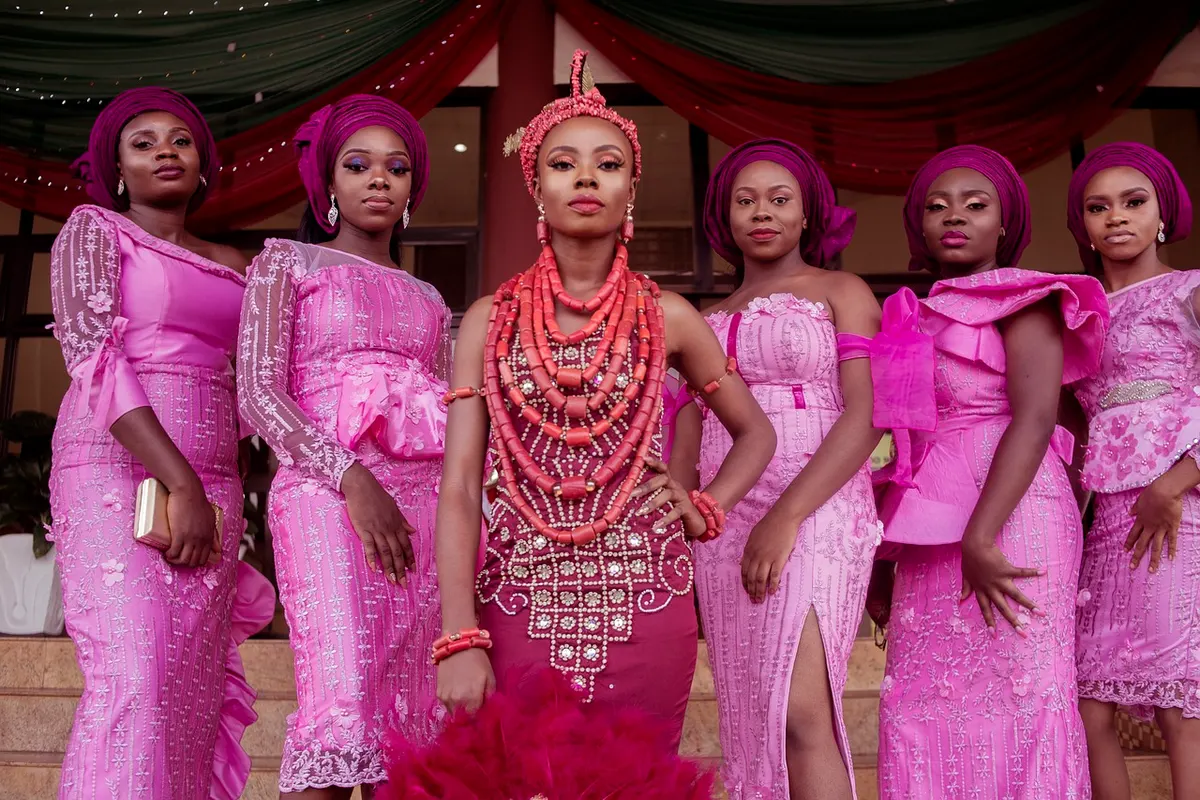
Traditional attire is the norm. Brides usually wear a blouse with a george wrapper and coral beads, and grooms usually wear isiagu with a red cap (okpu agu). Guests usually wear traditional outfits too. Close family and friends often wear a shared fabric (aso ebi) chosen by the family. If you are not told to wear aso ebi, smart traditional or formal clothes are suitable.
Etiquette for guests
A few points help guests show respect at igba nkwu.
- Treat the kola nut rite with respect. It opens the proceedings and is blessed and broken by an elder.
- Greet elders first and follow the order of proceedings set by the families.
- Bring a gift for the couple if you can. Gifts are a normal part of igba nkwu.
- Do not spray naira notes. Spraying is an offence under Section 21 of the CBN Act 2007, and the EFCC has secured convictions for spraying at social events.
- If you want to give money while the couple dance, a bank transfer or a voucher is a lawful alternative.
Planning a reception?
Many families hold the reception in a hall or hotel after the rites at the family home.
Questions and answers
What are the stages of an Igbo traditional marriage?
The usual stages are iku aka (knocking), background enquiries, meeting the bride's kindred, settling the marriage list and bride price, and igba nkwu (wine carrying). The names and order vary by community.
What is igba nkwu?
Igba nkwu is the wine-carrying ceremony, the public part of an Igbo traditional wedding. The bride finds the groom among the guests and offers him palm wine, showing that she accepts him.
How much is bride price in Imo State?
There is no fixed bride price in Imo State. Each family and community sets its own list and amount, and some families accept only a token.
Who gives the marriage list?
The bride's family gives the list to the groom's family, usually after the first visits. In many communities it is a standard list set by the community, with items for the parents, the umunna and the umuada.
What should I wear to an Igbo traditional wedding?
Wear traditional or smart formal attire. If the family has chosen an aso ebi fabric for guests, wear that.
Can I spray money at an Igbo wedding?
Spraying naira notes is an offence under Section 21 of the CBN Act 2007, and people have been jailed or fined for it. A bank transfer or voucher is a lawful way to give money.